Winds of change
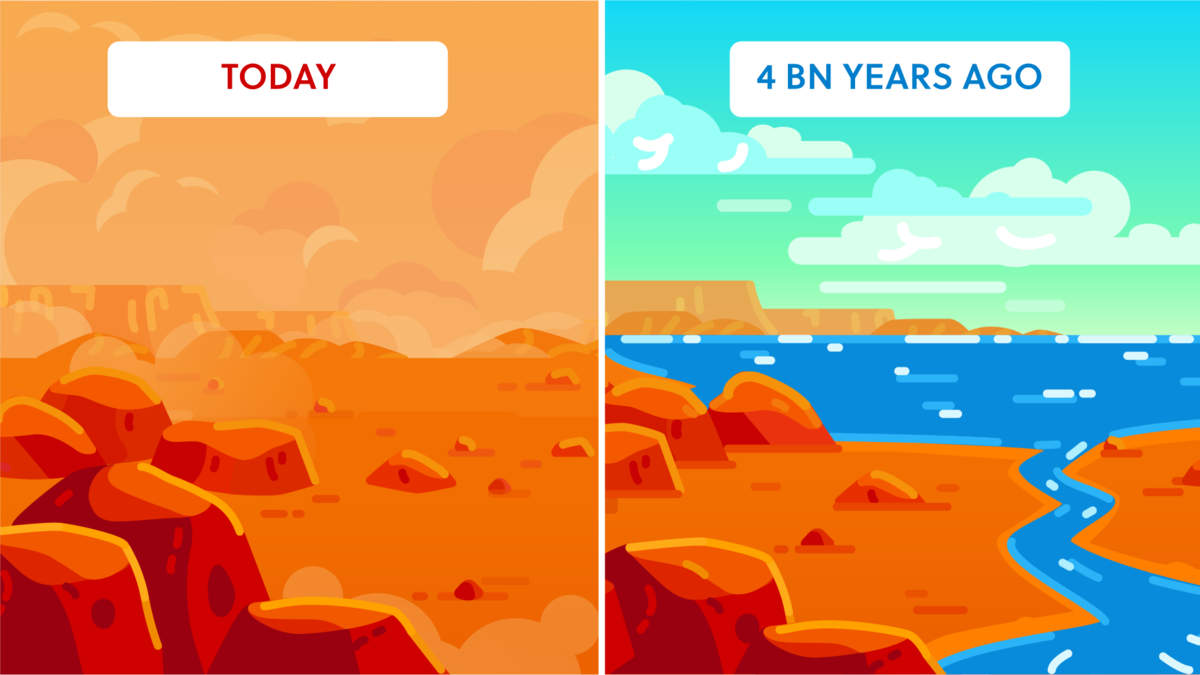
Today Mars is a cold, dry wasteland, but 44 billion years ago Mars was likely similar to Earth. It had liquid water and could have supported life. Why might Mars be uninhabitable today?
There are many characteristics of a planet that can affect its global average temperature and habitability.
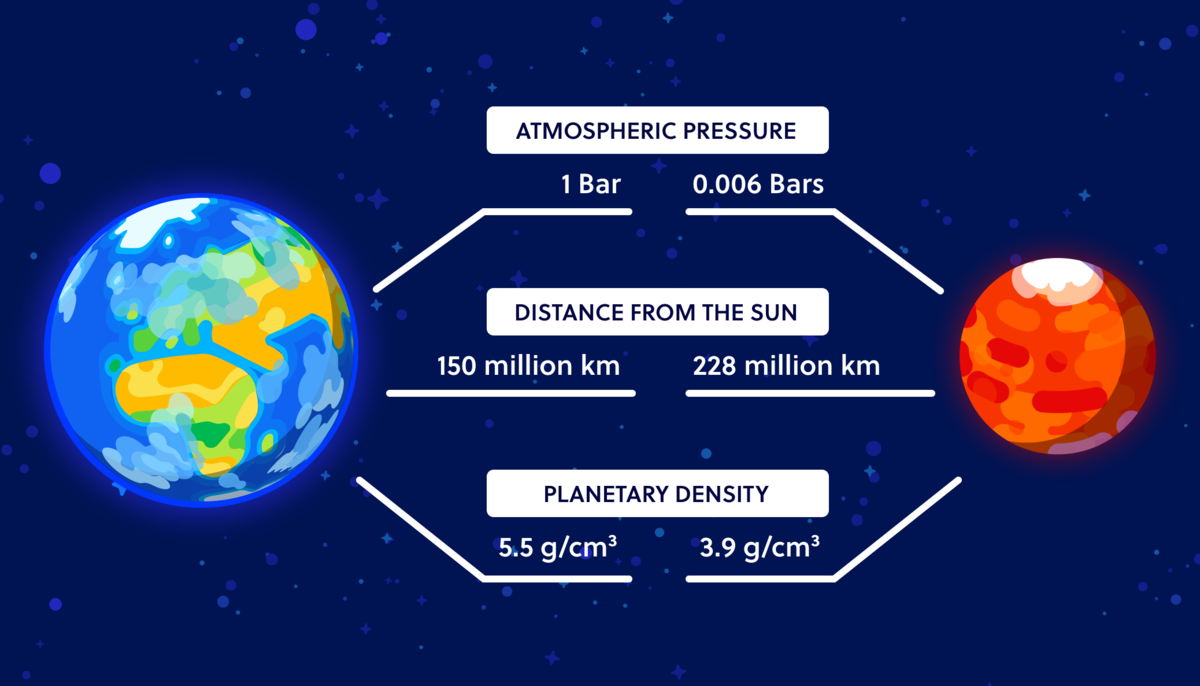
Which of Mars’ traits could be contributing to its freezing temperatures and inhabitability?
Mars’s atmosphere less dense than Earth’s
Mars is less dense than Earth
Mars is farther from the Sun than Earth
That’s right. Mars’ atmosphere is too thin to insulate the planet and trap heat. Distance also plays a part — since Mars is 50%50% farther from the Sun than Earth, its solar intensity is about 40%40% of Earth’s.
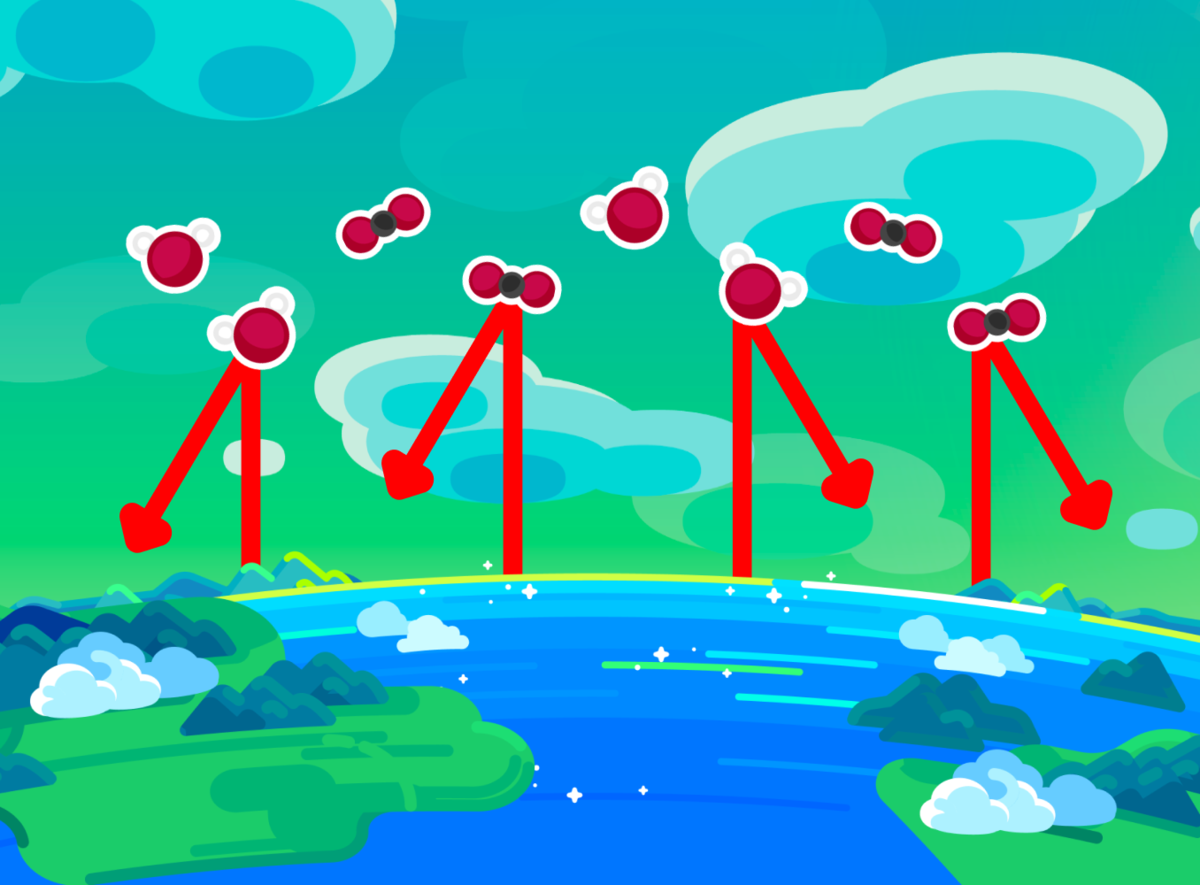
Earth’s thicker atmosphere contains water vapor and other greenhouse gasses, which help trap heat and are necessary for maintaining global temperatures ideal for liquid water.
Without a thick atmosphere containing water vapor, Mars has become cold. However, it was not always this way.
Scientists hypothesize that over the 500500 million years after it was formed, Mars lost much of its atmosphere. How might a planet lose its atmosphere?
Mars’ gravitational pull decreased
Mars’ rotational speed increased
The atmosphere was blown away
That’s right. Mars’ atmosphere was actually blown away by a phenomenon called the solar wind.
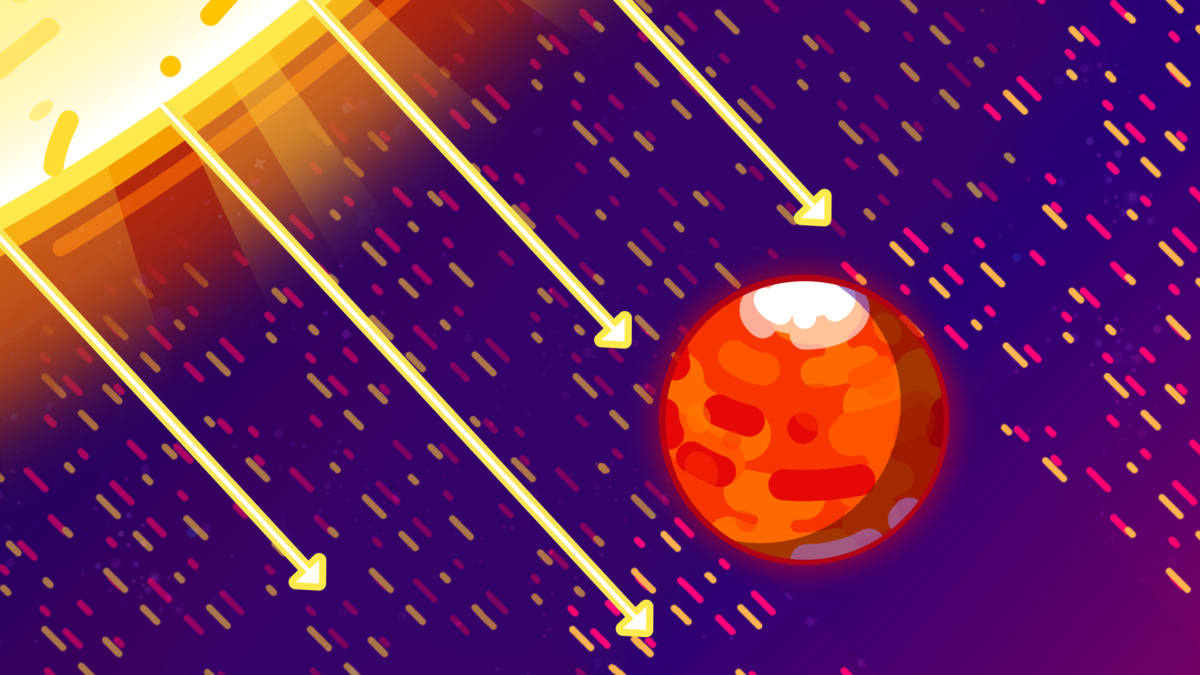
Charged protons and electrons in the Sun’s outer atmosphere, called the corona, heat up until they cannot be held down by the Sun’s gravity anymore. They then fly through space at extremely high speeds in a flow of particles called the solar wind.
We can perceive the solar wind by observing its effect on comets.
As comets orbit closer to the sun, they begin to vaporize and produce two “tails” — one of dust and one of gas. The gas tail is most affected by solar wind because it is made up of charged gas ions.
Drag the blue circle so that the comet’s gas tail is pointing in the correct direction.
Explanation 解释
The comet’s gas tail always points away from the Sun, even as the comet moves away from the Sun. This is because the charged gas ions in the gas tail are being “pushed” in the direction of the solar wind, which blows outwards from the Sun.
彗星的气体尾巴总是指向远离太阳的地方,即使彗星远离太阳也是如此。这是因为气体尾部带电的气体离子被“推”向太阳风的方向,太阳风从太阳向外吹来。